
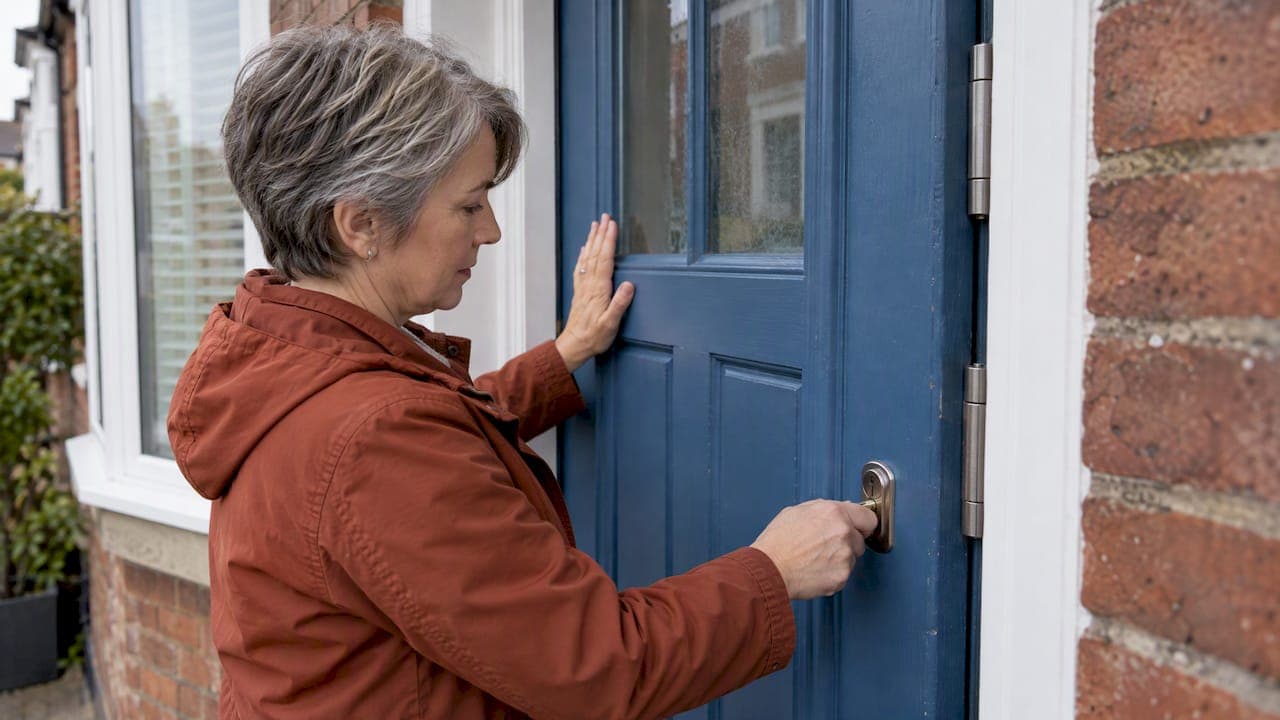
The best home security upgrade is the one that closes your weakest point first. For most UK homes that means sound doors and window locks, then lighting, then a properly installed alarm and cameras that tie the layers together. Do them in that order and each upgrade supports the next. Do them at random and you can spend a good deal on a camera while a poor lock stays on the back door.
This guide walks through the upgrades in a sensible sequence, explains what the police and insurers say about each, and shows where a professionally designed system fits in.
TL;DR
- Start with a walk around your property to find weak points: boundaries, lighting, doors, windows and anything visible from outside.
- Strengthen doors and windows first. Look for solid doors, a good cylinder and key-operated window locks.
- Add dusk-to-dawn lighting, then a monitored alarm and cameras as the layers that detect and record.
- Check your home insurance policy before you spend: some insurers require specific locks or alarms to be fitted and used.
- If you are upgrading an existing alarm or CCTV system, a site survey and fixed quotation will tell you what to keep and what to replace.
Table of Contents
- Start with a walk around your own property
- Doors and locks: the first upgrade for most homes
- Windows: locks, glass and the easy-to-miss openings
- Lighting and the boundary: make approach uncomfortable
- Alarms: when to upgrade and what to look for
- CCTV and video doorbells: useful, but plan them properly
- Away from home: small habits that complete the upgrade
- Check your insurance before you spend
- Which upgrade first? A simple order of priority
- Perspective: why one engineer from survey to certification matters
- Upgrading with Impact Security Systems
- FAQ
- Sources
Start with a walk around your own property
Before buying anything, look at the house as someone casing it would. West Yorkshire Police advise reviewing the perimeter, the shell and the interior: boundaries and lighting outside, doors, windows and frames on the building itself, and then what can be seen or reached once someone is close, such as valuables on show.
Do this once in daylight and once after dark. Write down what you find under three headings.

The perimeter
Can someone reach the back of the house unseen? Is the side gate fitted with a lock you actually use? Is the front door lit, and are there dark corners where a person could work undisturbed?
The shell
Try each external door and ground-floor window, plus any first-floor window reachable from a flat roof, extension or drainpipe. Note which have no lock, which have a lock that is rarely used, and which have worn or loose frames.
The inside
Look through your windows from the street. Laptops, car keys, handbags and spare keys left near the door tell a visitor what is worth taking. Police advice also covers marking property and using timer switches, which cost little and are worth doing at the same time.
Doors and locks: the first upgrade for most homes
Doors are where most upgrade money should go first. ProtectUK, the national policing counter-terrorism and security advice site, describes a solid-timber door of 44mm with substantial hinges and hinge bolts as the standard to aim for on timber doors.
For uPVC, aluminium and composite doors, the key detail is the cylinder. These doors usually have multipoint locks, and the same guidance says they should have a cylinder rated TS 007 3-star, or a 1-star cylinder combined with a pair of 2-star handles. The rating is usually stamped on the cylinder or its packaging, so you can check what you already have.
A quick door check
- Is the door solid, with no gaps or flexing around the lock?
- Do the hinges have hinge bolts, so the door cannot be lifted away if the hinges are attacked?
- If it is a multipoint door, does the cylinder carry a TS 007 rating?
- Do you lock it with the key every time you leave, rather than just closing it?
That last point matters more than people expect, and it ties directly into insurance, covered below.
Windows: locks, glass and the easy-to-miss openings
ProtectUK recommends that accessible windows have key-operated locks, ideally multipoint. It also notes that laminated glass or security film can protect adjacent panels, which is useful where a pane sits close to a door lock or handle.

Focus on the windows a person could reach without a ladder: ground floor, rear and side elevations, windows above porches or extensions, and small bathroom or utility windows that tend to be left unlocked because they seem too small to matter. Keep window keys somewhere handy for you but out of sight and reach from outside, so the locks actually get used.
Lighting and the boundary: make approach uncomfortable
Police crime prevention advice on keeping burglars out recommends external lighting at doors. For yards and gardens it suggests a clear, low white light that comes on from dusk to dawn, which keeps the space visible all night without a harsh glare.
The same page covers boundaries. A low front fence keeps the front of the house visible from the street. Taller fences at the rear and sides, with trellis or prickly planting along the top or beside them, make those routes harder to use unseen. The principle is simple: be open at the front where neighbours can see, and difficult at the back where nobody can.

Lighting also does a second job. A camera needs light to produce a usable picture at night, so good lighting is part of any CCTV upgrade, not a separate project.
Alarms: when to upgrade and what to look for
If your alarm is old, you cannot remember the last time it was serviced, it triggers false alarms, or nobody responds when it sounds, it is time to look at an upgrade. The same applies if you have extended the house or changed how you use it and the detection no longer covers the right areas.
The main choice is between monitored and unmonitored. Police advice explains that a monitored alarm lets an alarm company or a named key holder check whether an activation is genuine. An unmonitored alarm sounds loudly and relies on someone, such as a neighbour, noticing and checking the house. If you travel, work long hours or live where neighbours may not hear a bell, monitoring is the more dependable option.
What a good alarm upgrade includes
- Detection planned around the way the house is used, not a standard kit dropped into every room.
- A control panel that can be expanded, so you can add zones or devices later without replacing everything.
- Monitoring arranged so that someone checks the activation, with named key holders who can be reached.
- App control and notifications if you want to arm, disarm and check status remotely.
- Installation and certification by a company inspected to a recognised standard. You can read about our SSAIB accreditation on our site.
If you already have an alarm, a takeover is often possible: an engineer inspects the existing equipment, keeps what is sound and replaces what is not, rather than ripping everything out.
CCTV and video doorbells: useful, but plan them properly
Cameras and video doorbells give you a record of who came to the property and let you see the front door from your phone. Police advice is clear that CCTV is a useful tool but not a substitute for physical security, because it records events rather than stopping them. That is the argument for layering: strong doors and locks make entry hard, lighting makes it visible, and cameras and an alarm make sure you know about it and have evidence.
Features worth paying attention to
- Camera positions that cover entry points, not just the driveway.
- Night-time image quality, which depends on both the camera and the lighting around it.
- Reliable storage and remote access, so footage is available when you need it.
- Motion detection that can be tuned, so you are not alerted every time a car passes.
The privacy rules you need to know
In the UK, the Information Commissioner's Office explains that if your camera or doorbell records beyond your property boundary, data protection law applies. In practice that means displaying warning signs, storing footage securely, deleting it regularly and limiting what is recorded to your own property where possible. Cameras that only capture the inside of your home or your own garden generally fall outside UK GDPR, but angle them thoughtfully anyway, because neighbours and passers-by notice.
A designed installation helps here. Fields of view are set at survey stage, so you capture your own entrances rather than the pavement or next door's garden. See our home CCTV and remote monitoring options for how we approach camera systems.
Away from home: small habits that complete the upgrade
Equipment only works alongside habits. When you are away, an automatic plug-in time switch can turn a lamp on and off at preset times, so the house does not look empty. Keep valuables out of view from windows, and consider marking property, as West Yorkshire Police suggest. Do not leave a spare key in an obvious hiding place, and avoid advertising your travel plans on social media.
Smart home integration can automate some of this. Lights, heating and cameras can be controlled from one app, with schedules that vary so there is no obvious pattern. It is a convenience layer on top of the basics, which is the right order of priority.
Check your insurance before you spend
Security upgrades and insurance are linked in two ways. First, the Association of British Insurers says that improving your security can help you get the best possible deal on cover. Second, and more important, insurers may require minimum security devices, and may not pay out for theft or attempted theft if those devices are not fitted and used. In higher-risk areas, that can mean good-quality door and window locks and a burglar alarm.
Two practical steps follow:
- Read the security conditions in your policy schedule and check that every door and window meets them.
- Ask your insurer whether specific standards, such as the lock rating or installer certification, are needed for any new equipment, and keep the installation paperwork.
The ABI also makes a point worth remembering: some stolen items are irreplaceable and carry sentimental value that no payout covers. That is why prevention matters more than the claim.
Which upgrade first? A simple order of priority
| Priority | Upgrade | Why it comes here |
|---|---|---|
| 1 | Door cylinders, hinges and window locks | Makes forced entry difficult at the points most commonly used |
| 2 | Dusk-to-dawn and doorway lighting | Removes cover and supports any camera |
| 3 | Monitored intruder alarm | Detects entry and gets a human to check it |
| 4 | CCTV and video doorbell | Records and lets you see what is happening remotely |
| 5 | Smart integration and Wi-Fi coverage | Ties devices together and keeps cameras connected |
Wi-Fi is easy to overlook. Cameras, doorbells and app-controlled alarms all depend on a stable connection in the places where the devices sit, which are often the garden, garage and front door, where signal is weakest. Planning coverage with the security design avoids dropped feeds later.
Perspective: why one engineer from survey to certification matters
We have spent over 20 years designing and installing security systems across Liverpool and the North West, and the pattern in home upgrades is consistent. The expensive mistakes come from buying products before anyone has looked at the house.
That is why every system we install is specified, installed and SSAIB-certified by the same experienced engineer. There are no salespeople and no subcontractors. The person who stands in your hallway at the survey is the person who fits the system and answers your questions afterwards. We think that is the most reliable way to get a system that fits the way you live, and it makes accountability simple.
Our advice is to treat security as layers. Sound locks and lighting are the base. A monitored alarm adds detection and a response. Cameras and smart control add visibility. We design the electronic layers so they work with what you already have, and we give you a clear fixed quotation before any work starts.
Freddie
Upgrading with Impact Security Systems
If you want the alarm, CCTV, doorbell, Wi-Fi and smart control layers designed and fitted by one accredited engineer, our home security service covers burglar alarms, home CCTV, smart doorbells and intercoms, smart home integration and home Wi-Fi. We begin with a site survey and follow with a fixed quotation.

Already have a system? Our servicing and maintenance team handles annual servicing, SSAIB-certified maintenance, police-response monitored systems, 24-hour callouts and takeovers of existing installations. To see how we handle a full home project, read our new-build residential security case study. We have a 5.0 rating from 44 Google reviews.
FAQ
What is the most effective home security upgrade?
For most homes, it is better door and window security. Check for a solid door, hinge bolts and a TS 007-rated cylinder on multipoint doors, and key-operated locks on accessible windows. After that, lighting, a monitored alarm and cameras add detection and evidence.
Do I need a monitored alarm?
A monitored alarm lets an alarm company or key holder check whether an activation is genuine, whereas an unmonitored alarm relies on someone nearby noticing. If you are often away or your neighbours are some distance off, monitoring is the more dependable choice. Check your insurance policy too, as some insurers set minimum requirements.
Is it legal to have CCTV or a video doorbell at home?
Yes, but the rules depend on what it records. If it captures beyond your property boundary, data protection law applies, so you should display warning signs, store footage securely and delete it regularly. The ICO's guidance on home CCTV explains your responsibilities in full.
Will upgrading my security lower my insurance premium?
It can help you get the best deal, according to the ABI, but it is not guaranteed. The more important point is that your insurer may require certain devices and may not cover theft if they are not fitted and used. Ask your insurer which standards apply to your policy.
Can you upgrade an alarm I already have?
Often, yes. An engineer can survey the existing system and decide what to keep and what to replace, or take it over for servicing. Contact us for a survey and fixed quotation.
Sources
- Home security | West Yorkshire Police
- Security at Home | ProtectUK
- Keep burglars out of your property | Police.uk
- Home CCTV systems | ICO
- ICO guidance on domestic CCTV and smart doorbells
- ABI guide to home security